E-commerce inventory in Excel is the most common engagement for any D2C brand. The right workbook replaces dedicated inventory software for up to 500 SKUs and 3 channels, and the patterns below are the ones worth building into every inventory workbook. The four templates are: SKU master, channel inventory, consolidated inventory, and reorder point calculator.
The four templates
SKU master with title, cost, price, weight, barcode, supplier, lead time. Channel inventory sheet per channel with SKU and current stock. Consolidated inventory that sums across channels (Power Query handles the merge). Reorder point calculator with the formula =lead_time × avg_daily_sales + safety_stock. The senior combines them in a single workbook with Power Query for the channel merge and a Slicer for the channel filter.
The five KPIs
Sell-through rate (units sold / units received) - the senior tracks by SKU and by channel. Stock-to-sales ratio (current stock / average daily sales) - the number of days of stock on hand. Dead stock value - the value of inventory that has not sold in 90+ days. Gross margin per SKU - drives the reorder priority. Channel share - the percentage of revenue from each channel. The five together answer: are we selling the right products, in the right channels, at the right margin?
How Power Query handles the multi-channel sync
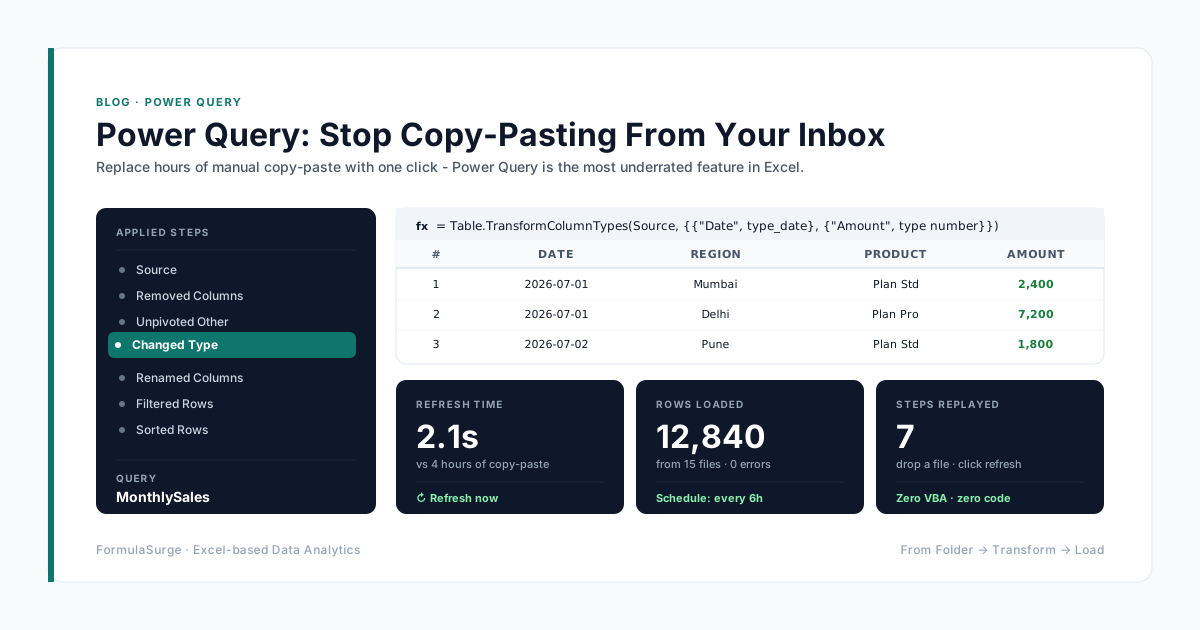
The senior uses Power Query to read the channel CSVs and merge them into a consolidated inventory table. The pattern: each channel export is dropped in a shared folder → Power Query From Folder reads all the files → the SKU column is the merge key → the consolidated table is the source for the dashboard. The refresh is on demand or on schedule. The senior ships the Power Query pipeline in one day and the team operates it for years.
When to move to dedicated inventory software
Excel e-commerce inventory tops out at 500 SKUs and 3 channels. For larger catalogues or 5+ channels, the senior moves to dedicated inventory software (Zoho Inventory, Cin7, Unleashed). The transition is a one-time data migration: the SKU master goes into the new system, the channel connections are configured, the reorder rules are set up. The Excel workbook becomes the consolidation layer for the multi-channel P&L. The senior uses Excel for the small brand and the consolidation, dedicated software for the operational layer.