You do not need to know all 500 Excel functions. In day-to-day finance and reporting work, the same ten come up again and again - master these and most daily analysis becomes routine.
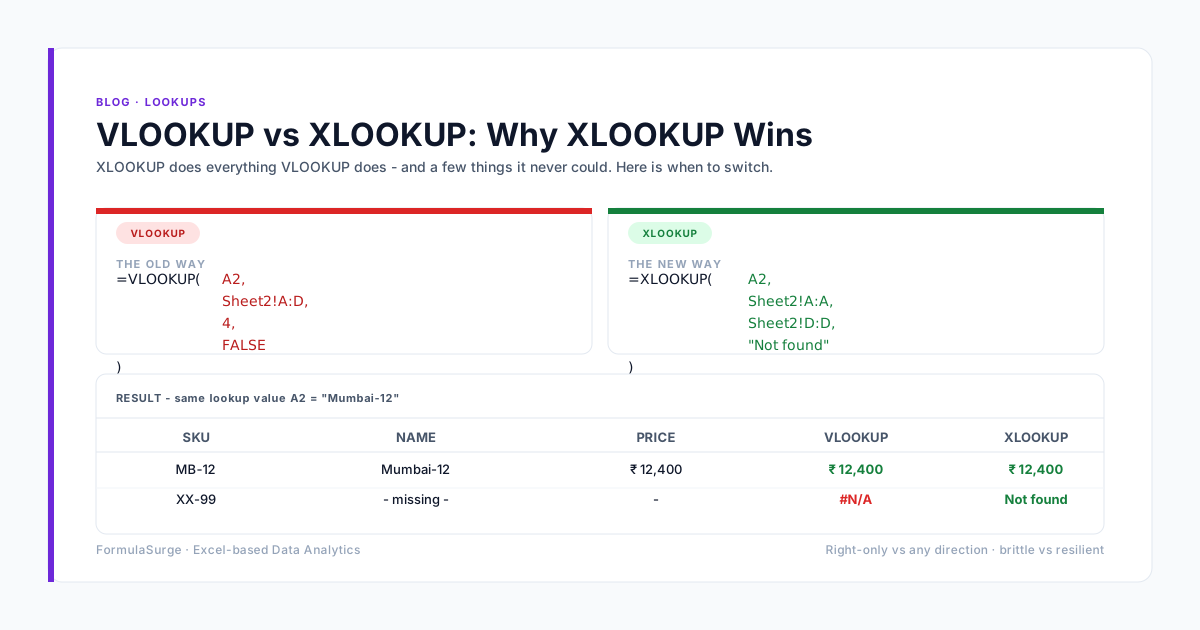
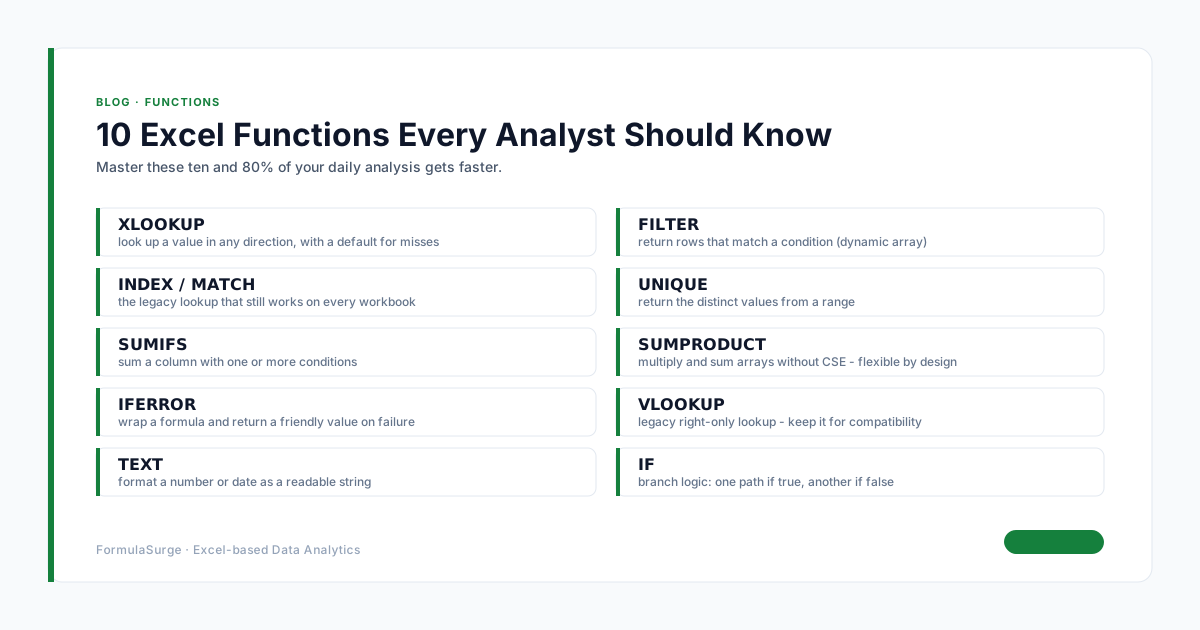
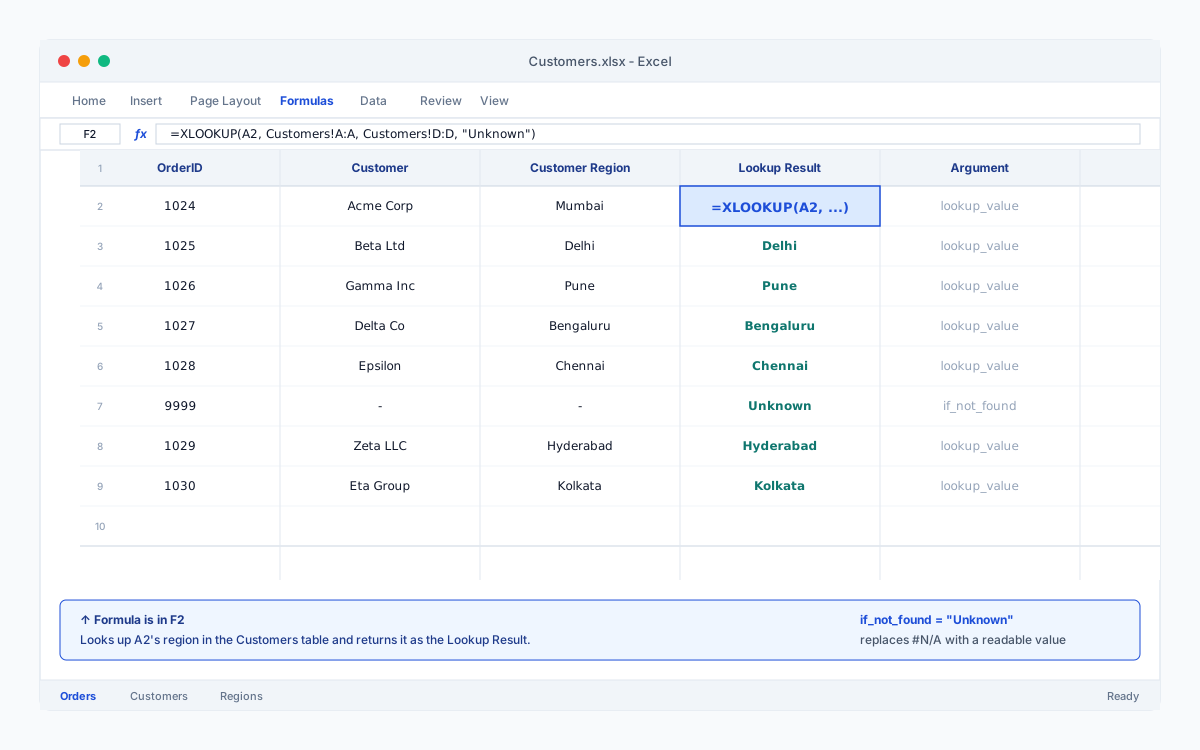
XLOOKUP
look up a value in any direction, with a default for misses
INDEX / MATCH
the legacy lookup that still works on every workbook
SUMIFS
sum a column with one or more conditions
IFERROR
wrap a formula and return a friendly value on failure
TEXT
format a number or date as a readable string
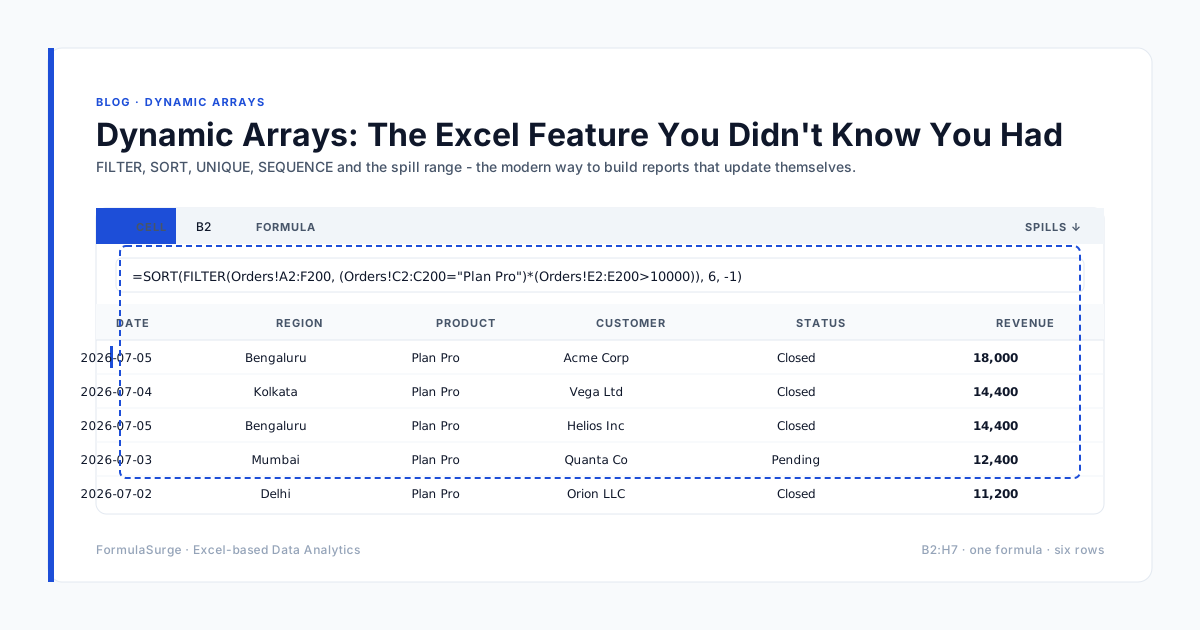
FILTER
return rows that match a condition (dynamic array)
UNIQUE
return the distinct values from a range
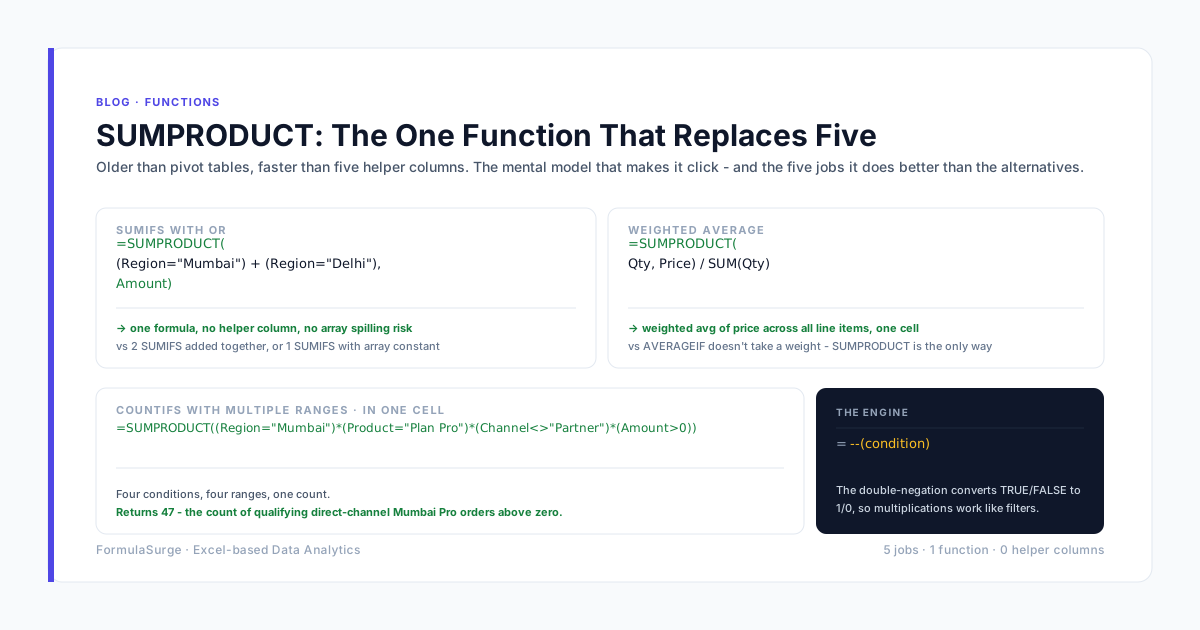
SUMPRODUCT
multiply and sum arrays without CSE - flexible by design
VLOOKUP
legacy right-only lookup - keep it for compatibility
IF
branch logic: one path if true, another if false
Where to start
If you only learn three: XLOOKUP, SUMIFS and FILTER. They cover looking things up, aggregating them and slicing them - which is 80% of what an analyst does before lunch.